
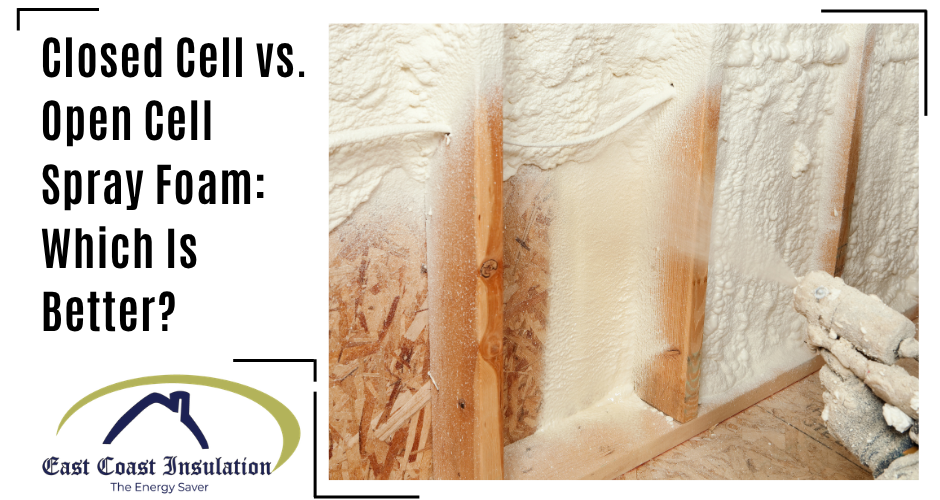
Closed Cell vs. Open Cell Spray Foam: Which Is Better?
If you’re considering spray foam insulation for your home or business, you’ve probably come across two options: closed cell spray foam and open cell spray foam. While both offer excellent insulation and air sealing compared to traditional fiberglass, they serve different purposes.
So which one is better?
The answer depends on your home’s construction, your budget, and your insulation goals. Understanding the differences can help you make the best investment for your property.

What Is the Difference Between Closed Cell and Open Cell Spray Foam?
Both products are polyurethane spray foams that expand after application to fill gaps and cracks. The primary difference is the structure of the foam itself.
Closed Cell Spray Foam
Closed cell foam is dense and rigid. The tiny cells within the foam remain completely enclosed, creating a material that’s strong, water-resistant, and highly insulating.
Benefits include:
- Higher R-value (approximately R-6 to R-7 per inch)
- Excellent air barrier
- Acts as a moisture barrier
- Adds structural strength to walls and roofs
- Ideal for crawl spaces, basements, exterior walls, and metal buildings
Open Cell Spray Foam
Open cell foam is softer and lighter. The cells remain partially open, giving the material a sponge-like texture that expands significantly during installation.
Benefits include:
- Lower cost
- Excellent air sealing
- Great sound reduction
- Flexible enough to accommodate slight building movement
- Ideal for interior walls, attics, and soundproofing applications
R-Value Comparison
One of the biggest differences between the two products is insulating performance.
| Insulation Type | Approximate R-Value per Inch |
|---|---|
| Closed Cell Spray Foam | R-6 to R-7 |
| Open Cell Spray Foam | R-3.5 to R-4 |
Because closed cell foam provides nearly twice the insulation per inch, it’s often the better choice when wall or roof cavity space is limited.
Moisture Resistance
This is where closed cell spray foam really stands out.
Closed cell foam resists water absorption and helps prevent moisture intrusion. That’s why it’s commonly recommended for:
- Crawl spaces
- Basements
- Exterior walls
- Pole barns
- Metal buildings
- Coastal homes
Open cell foam can absorb water if exposed to prolonged moisture, making it less suitable for areas where water intrusion is possible.
Air Sealing
Both products create an excellent air seal that helps eliminate drafts and improve energy efficiency.
Air leaks account for a significant amount of energy loss in most homes. Both open cell and closed cell foam seal gaps around wiring, plumbing, framing, and other penetrations much better than traditional insulation.
In this category, both products perform exceptionally well.
Structural Strength
Closed cell spray foam cures into a rigid material that bonds tightly to wood, concrete, and metal.
This added rigidity can strengthen walls and roof assemblies, making it especially valuable in areas that experience high winds or severe weather.
Open cell foam remains flexible and does not provide structural reinforcement.
Soundproofing
If your primary goal is reducing noise, open cell spray foam often has the advantage.
Its softer structure absorbs sound waves more effectively, making it popular for:
- Interior walls
- Home theaters
- Bedrooms
- Home offices
- Multi-family housing
Closed cell foam also reduces sound but is designed more for thermal performance than acoustic insulation.
Cost Comparison
Open cell spray foam is generally less expensive because it uses less material and expands much more during installation.
Closed cell spray foam requires more material per square foot and therefore costs more upfront.
However, many homeowners find that the additional energy savings and durability of closed cell foam offset the higher initial investment over time.
Which Spray Foam Is Best for Georgia Homes?
For many homes throughout Coastal Georgia and the Southeast, closed cell spray foam is often the preferred option because it performs exceptionally well in hot, humid climates.
Closed cell foam helps:
- Control moisture
- Reduce humidity infiltration
- Improve energy efficiency
- Resist mold growth
- Protect against wind-driven rain
Open cell foam remains an excellent option for attic rooflines and interior applications where sound control and affordability are priorities.
Which One Should You Choose?
Choose Closed Cell Spray Foam If You Want:
- Maximum energy efficiency
- Higher R-value
- Moisture protection
- Added structural strength
- Long-term durability
- Insulation for crawl spaces, basements, or exterior walls
Choose Open Cell Spray Foam If You Want:
- Lower installation cost
- Better sound absorption
- Interior wall insulation
- Attic applications where moisture control is less of a concern
- Excellent air sealing on a budget
Frequently Asked Questions
Is closed cell spray foam worth the extra cost?
For many homeowners, yes. Its higher R-value, moisture resistance, and long lifespan often make it a better long-term investment.
Can both types be used in the same home?
Absolutely. Many homes use closed cell foam in crawl spaces and exterior walls while using open cell foam in attic rooflines or interior walls to maximize performance and value.
Which spray foam lasts longer?
Both products are extremely durable, but closed cell spray foam typically lasts 50 years or more and maintains its insulating performance throughout its lifespan.
Which insulation lowers energy bills the most?
Because of its higher R-value and moisture resistance, closed cell spray foam generally provides the greatest energy savings, especially in hot and humid climates.
Let East Coast Insulation Help You Choose the Right Solution
Every home is different, and the best insulation depends on your goals, your budget, and the way your home is built. At East Coast Insulation, we help homeowners and builders choose the right spray foam solution for long-lasting comfort, lower energy bills, and improved indoor air quality.
Whether you’re insulating a new construction project, upgrading an older home, or planning a commercial installation, our experienced team can recommend the best option for your needs.
Contact East Coast Insulation today to schedule a consultation and find out whether closed cell or open cell spray foam is the right choice for your property.